If you’re asking where do I register my dog in Ziebach County, South Dakota for my service dog or emotional support dog, the key detail is this: service dog status and emotional support animal (ESA) status are not the same thing as a local dog license. In most places, a dog license in Ziebach County, South Dakota (when required) is handled locally and is tied to basic public health rules—especially rabies vaccination and animal control enforcement.
This page explains where to register a dog in Ziebach County, South Dakota, what “registration” typically means locally, what paperwork you may need, and how local licensing rules differ from the legal rules for service dogs and emotional support animals.
Where to Register or License Your Dog in Ziebach County, South Dakota
Ziebach County may not use the same “pet licensing counter” model as larger cities. In rural counties, dog licensing, animal control concerns, and rabies enforcement questions are often routed through local government offices (and sometimes handled through law enforcement or local ordinance enforcement). The offices below are examples of official local contacts within Ziebach County you can start with to ask where to register a dog in Ziebach County, South Dakota based on your exact location (county vs. city limits) and the type of “registration” you mean (license, rabies compliance, or complaint/enforcement).
Ziebach County Sheriff’s Office
Ziebach County Auditor’s Office
Ziebach County Treasurer’s Office
Ziebach County Register of Deeds
Ziebach County Clerk of Court (Fourth Judicial Circuit)
Ziebach County Courthouse (General Contact)
Overview of Dog Licensing in Ziebach County, South Dakota
What “registering” a dog usually means
In everyday terms, “register my dog” can mean one of three things: (1) buying or renewing a local license tag, (2) proving your dog is current on rabies vaccination and compliant with local health rules, or (3) obtaining paperwork for housing or access questions related to a disability accommodation. Only the first two are typically part of local animal control or licensing systems.
Licensing is usually local (city or county)
South Dakota communities often set dog licensing and nuisance animal rules through local ordinances. That’s why the best answer to where to register a dog in Ziebach County, South Dakota depends on whether you live within a city’s limits or in the unincorporated county. If there is a city license requirement, it may be separate from any county-level requirements and may have its own fees, renewal dates, or vaccination proof standards.
Rabies vaccination is a common enforcement trigger
Even where a community does not use a formal annual licensing program, rabies vaccination compliance is widely treated as a core public health requirement. If your dog bites someone, is bitten, or is reported as running at large, officials may ask for proof of current rabies vaccination and may follow quarantine or confinement rules depending on the situation.
How Dog Licensing Works Locally in Ziebach County, South Dakota
Step 1: Confirm which jurisdiction applies to your address
Start by confirming whether your residence is inside a city boundary or in the county outside city limits. This determines which local office or ordinance applies. If you’re unsure, the courthouse offices listed above can usually point you to the right place.
Step 2: Ask what documentation is required for a local dog license
For a typical local dog license, communities commonly ask for: proof of rabies vaccination, the owner’s contact information, and sometimes proof of sterilization status if fees vary. Some offices may also request proof of residency (especially if licensing is city-based). Requirements vary, so confirm exactly what Ziebach County (or your city) needs before you go in.
Step 3: Understand what a license does—and does not—do
A local license is primarily an identification and compliance tool. It can help: reunite you with a lost dog, show compliance during an animal control contact, and document rabies vaccination status when required for licensing. However, a license is not the same as “certifying” a service dog or “registering” an emotional support animal. A dog can be fully licensed and still not be a service dog. Conversely, a legitimate service dog may still be required to comply with local public health rules such as rabies vaccination.
Rabies vaccination: what to expect
In South Dakota, dogs (and other animals) are commonly required to have a current rabies vaccination beginning at a young age, and proof is often required for licensing and public health enforcement situations. If you recently moved into the county, call ahead to ask whether your proof of vaccination must be a certificate from your veterinarian and whether the county/city accepts a 1-year or 3-year vaccine schedule as shown on the certificate.
Service Dog Laws in Ziebach County, South Dakota
A service dog is defined by training and disability-related work
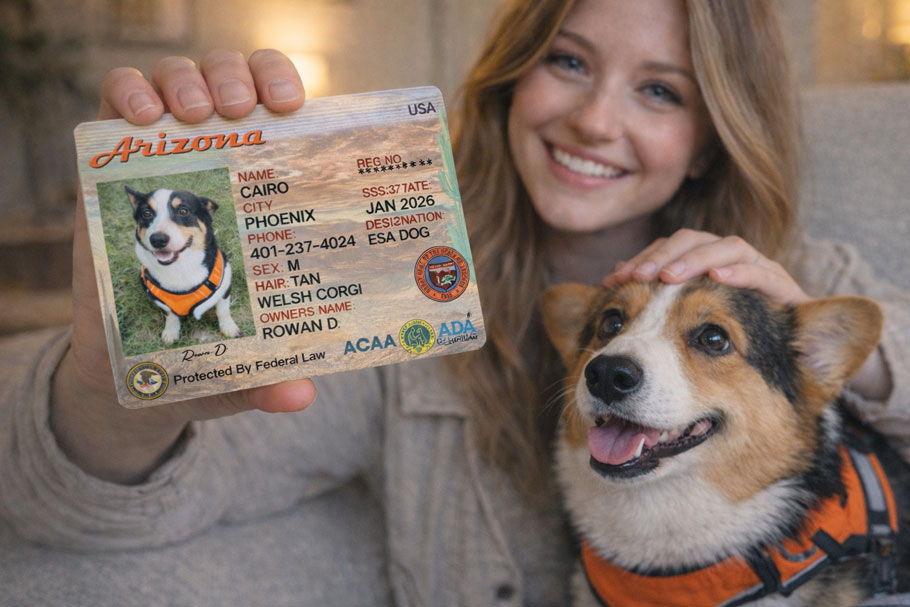
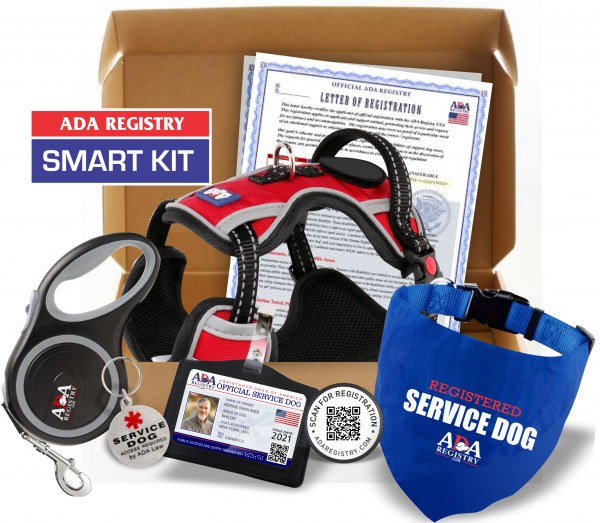
A service dog is generally a dog that is individually trained to do work or perform tasks for a person with a disability. The tasks must be directly related to the person’s disability (for example, guiding, alerting, retrieving, interrupting harmful behaviors, or assisting during medical events). Service dog status is about the dog’s training and the handler’s disability-related need—not about a paid registration, an online ID card, or a vest.
Service dog status is different from a local dog license
Getting a dog license in Ziebach County, South Dakota is a local compliance step and may be required of many dogs, including pets, working dogs, and service dogs. Licensing does not “make” a dog a service dog and does not grant public access rights by itself. Likewise, having a service dog does not automatically cancel local requirements like rabies vaccination, leash rules, or nuisance ordinances that apply to all dogs.
What businesses and offices can ask (practical overview)
In most everyday access situations, staff typically should not demand “registration papers” for a service dog. Instead, the common approach is limited questions about whether the dog is required because of a disability and what work or tasks the dog has been trained to perform. Even so, service animals still need to be under control and housebroken, and they must comply with applicable public health requirements (which is where rabies vaccination and local rules come in).
Emotional Support Animal Rules in Ziebach County, South Dakota
An ESA is not the same as a service dog
An emotional support animal (ESA) provides comfort by its presence, but it is not required to be trained to perform specific disability-related tasks in the way a service dog is. Because of that, ESAs generally do not have the same public access rights as service dogs in places like stores, restaurants, and most public-facing businesses.
Where ESAs matter most: housing (and sometimes certain policies)
ESAs most commonly come up in housing situations where a resident requests a reasonable accommodation (for example, an exception to a “no pets” rule or pet fees). Housing providers may request reliable documentation supporting the disability-related need for an accommodation. This is separate from local licensing: even with an ESA accommodation, the dog may still need to follow local rules like rabies vaccination, leash rules, and any applicable licensing requirements.
Avoid confusion: “ESA registration” vs. local licensing
If you are specifically looking for where to register a dog in Ziebach County, South Dakota because a landlord asked for “registration,” clarify whether they mean a local dog license (public health/animal control) or documentation for a housing accommodation. These are different processes and are handled by different entities.